
You are caring for a new baby and ready to feel strong in your own body again. Maybe you want to get back to running, hiking, or simply keeping up with your family without worrying about leaks, pressure, or pain. The challenge is knowing where to start, because pregnancy and childbirth change your core and pelvic floor in ways that standard workouts simply do not address.
That is where Pilates physical therapy in Charlotte, NC can make a real difference. At Balanced Physical Therapy & Pilates, you receive a structured, supervised path back to exercise built around how your body is actually recovering.
Why Returning to Exercise After Baby Is More Complex Than It Seems
Your abdominal muscles, pelvic floor, and posture all adapt significantly during pregnancy and delivery. Jumping back into high-impact workouts or crunch-style core exercises before these areas are ready can leave you frustrated, uncomfortable, or sidelined.
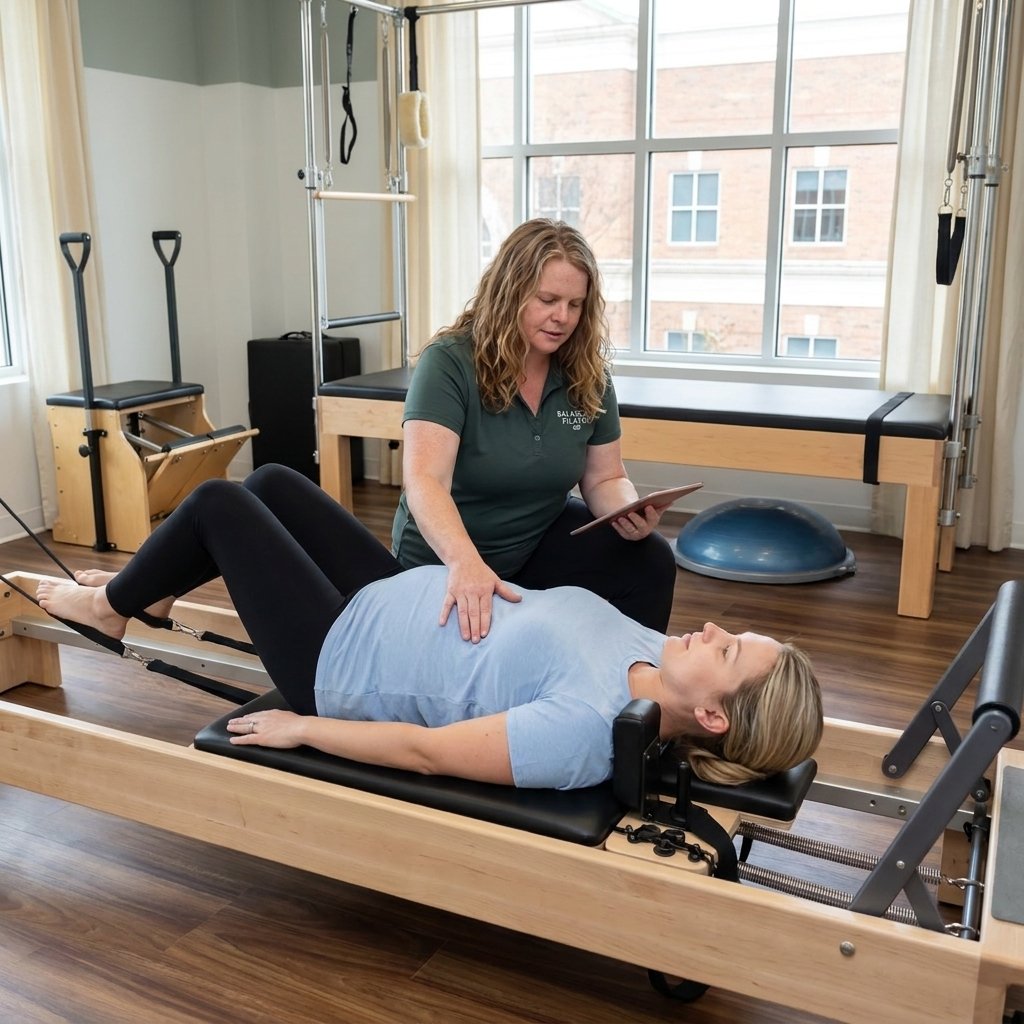
Common postpartum concerns that deserve proper attention include:
Diastasis recti: separation of the abdominal muscles along the midline
Incontinence: leaking with coughing, sneezing, lifting, or jumping
Prolapse: a feeling of heaviness or pressure in the pelvic area
Pelvic pain: discomfort that flares with certain movements or positions
Painful intercourse: a common issue that responds well to targeted pelvic health care
These symptoms are common, but they are not something you have to push through or accept as permanent. Pelvic health physical therapy is an established, evidence-supported approach for addressing each of them.
How Pilates Physical Therapy Supports Postpartum Recovery
Pilates emphasizes controlled movement, intentional breath, and deep core engagement, making it a natural fit for rebuilding after pregnancy. When guided by a licensed physical therapist, each exercise is selected and adjusted for your specific stage of recovery rather than applied as a one-size-fits-all program.
A Pilates-based postpartum recovery approach can help you:
Rebuild coordination between your deep abdominals, diaphragm, and pelvic floor
Improve posture that has shifted from pregnancy, feeding, and carrying your baby
Develop body awareness so you can move with control during daily tasks
Progress strength gradually instead of guessing how much is too much
The Role of Reformer and Tower Equipment
The Reformer and Tower use spring-based resistance to support or challenge your body as needed. Early in recovery, you can build strength with added support. As your capacity improves, resistance and movement complexity increase in small, measured steps that match your progress.
What Makes Care at Balanced Physical Therapy & Pilates Different
Postpartum recovery works best when the person guiding you understands both rehabilitation and movement. At Balanced Physical Therapy & Pilates, you can expect:
Full one-on-one sessions with a Doctor of Physical Therapy, with no aides or assistants involved
Physical therapy and certified Pilates instruction from the same provider, so your plan stays cohesive from start to finish
Pelvic health care delivered with compassion and discretion
Manual therapy when hands-on treatment can help ease tension, pain, or restricted mobility
A personalized home exercise program so you can keep progressing between visits
Sessions that run on time, which matters when your schedule revolves around a new baby
You can learn more about this approach on the About page or explore the full range of physical therapy services available.
Do You Need a Referral to Get Started?
No. North Carolina allows direct access to physical therapy, meaning you can schedule an evaluation without a physician referral. This allows you to address symptoms like leaking, core weakness, or pelvic pain as soon as they concern you.
It is still important to follow guidance from your OB/GYN or midwife regarding medical clearance. A clearance visit confirms that you are healing, but it does not always assess how well your core and pelvic floor are functioning together. A physical therapy evaluation fills that gap with a more detailed look at movement, strength, and coordination.
What a Return to Running, Hiking, and Daily Activities Looks Like
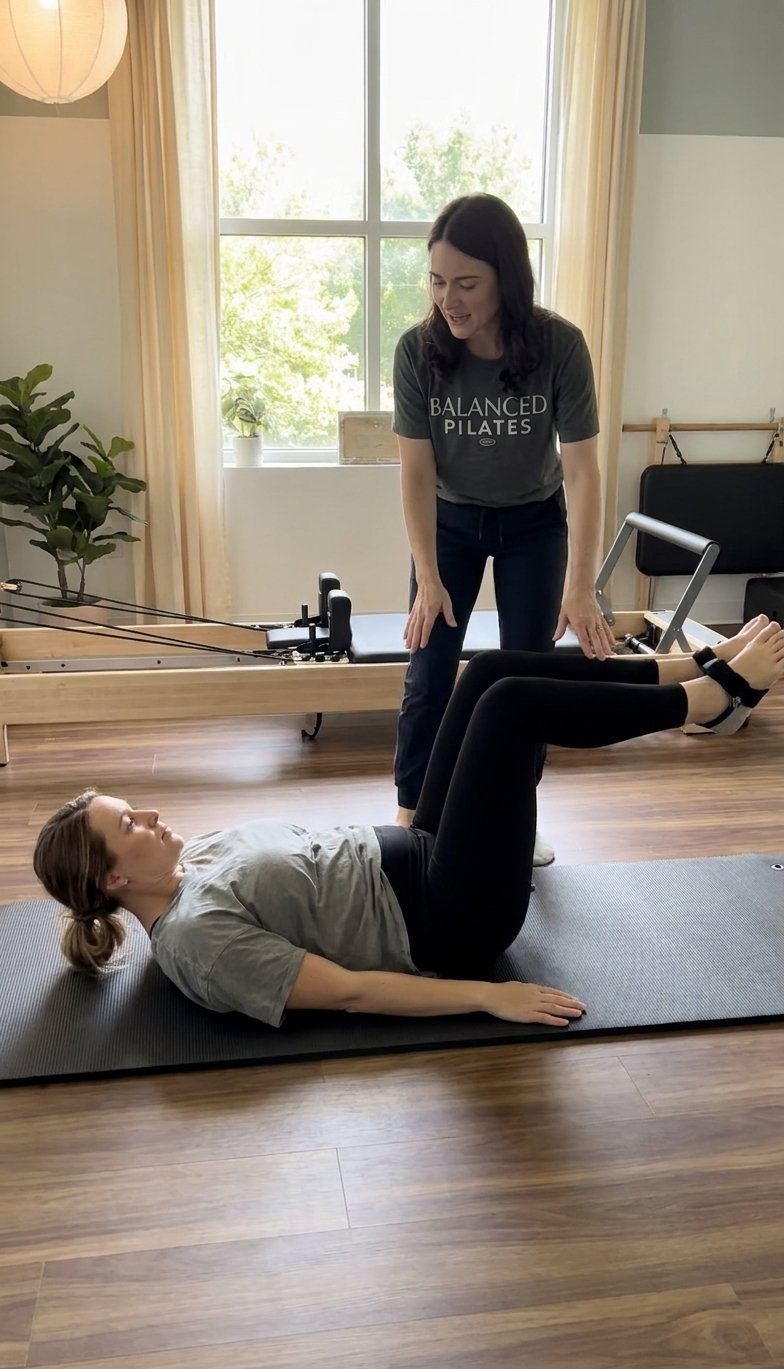
Your progression should feel logical and intentional, not rushed. Most postpartum recovery plans move through a few clear phases:
Foundation: breathing mechanics, pelvic floor coordination, and gentle core activation
Strength: progressive lower body, back, and core work using the Reformer and Tower
Return to impact: building the control and capacity needed for running, sports, hiking, and active family life
Once you feel confident in your movement, you may choose to continue in small group Pilates classes, capped at four participants. You maintain the personal attention that supports your progress while staying consistent with your movement routine.
Ready to Feel Strong Again?
You do not have to figure out postpartum exercise on your own. If you are ready for a plan that respects your recovery and supports your goals, Balanced Physical Therapy & Pilates is here to guide you. Book your appointment today and take the first step toward moving confidently again. Visit the Balanced Physical Therapy & Pilates home page to get started.
